
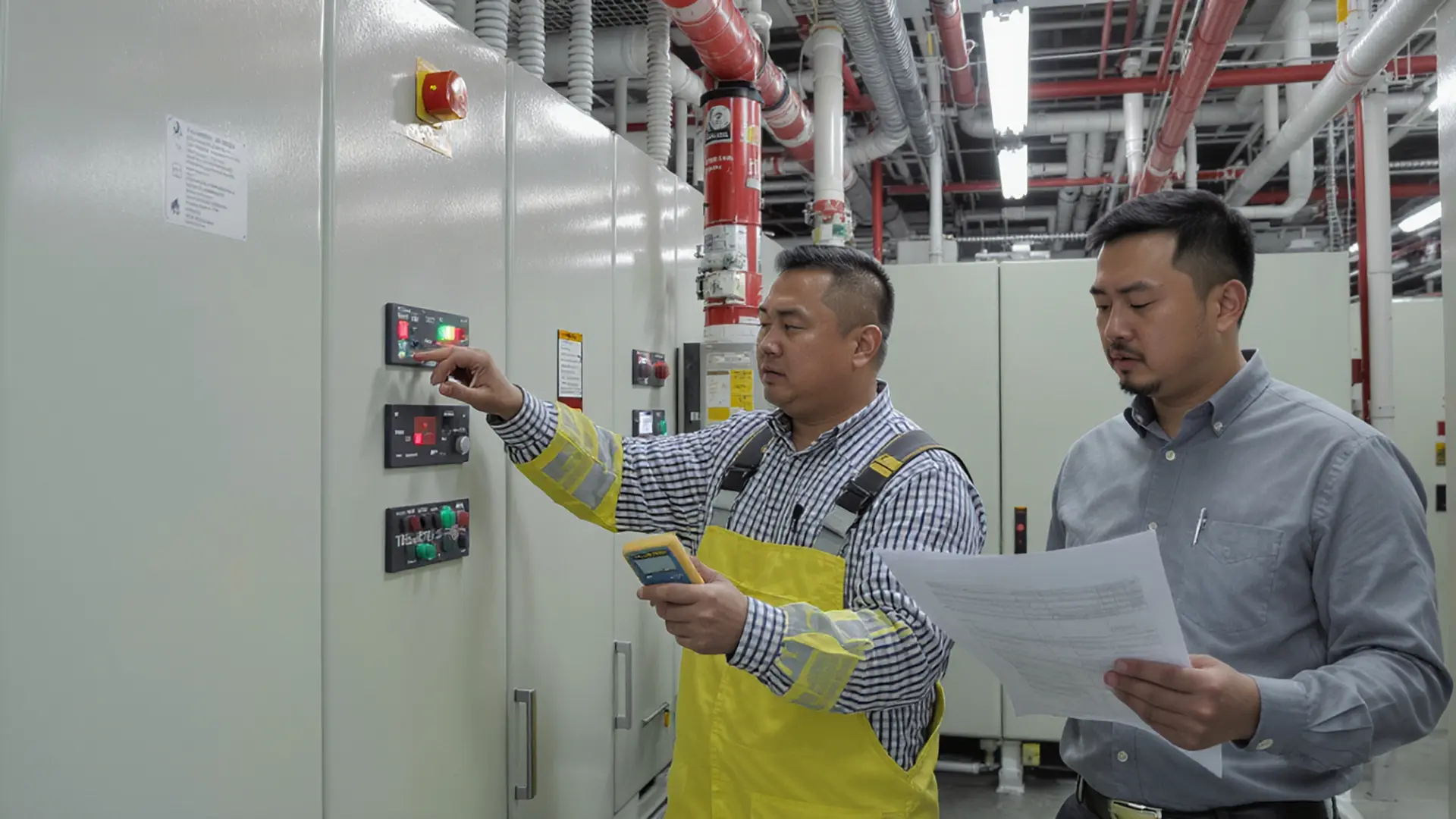
Electrical systems rarely fail because of poor technical design. More often, problems begin when coordination between disciplines breaks down during execution.
Across many commercial and industrial projects in Malaysia, electrical works reach installation with approved drawings and compliant specifications, yet still encounter delays, rework, or testing challenges. The gap lies between design approval and site execution reality.
Understanding this execution gap is essential to delivering predictable project outcomes.
Electrical systems do not exist independently
Electrical infrastructure interacts with architecture, structure, mechanical systems, and operational requirements. Routing pathways, equipment placement, and access clearances all depend on coordination between multiple stakeholders.
When coordination happens only at a drawing level, several risks emerge:
- service routes that appear feasible but clash with structural or mechanical elements
- equipment layouts that restrict access for testing or maintenance
- insufficient working space once installation begins
- sequencing conflicts between trades
None of these issues necessarily indicate poor design. Instead, they highlight how systems behave differently once construction moves from concept to reality.
Common coordination challenges seen on Malaysian projects
While every project is unique, several patterns appear frequently:
1. Space optimisation pressures
Electrical rooms and service corridors are often reduced to maximise usable floor area. While commercially beneficial, tighter spaces increase installation complexity and reduce flexibility for routing adjustments.
2. Late-stage design changes
Architectural or operational changes can occur after coordination milestones. Without structured execution reviews, electrical systems must adapt quickly, increasing the risk of rework.
3. Trade stacking and compressed schedules
Fast-track timelines mean multiple disciplines work simultaneously. Without clear sequencing, electrical installation becomes reactive rather than planned.
4. Testing and commissioning access constraints
Systems may comply with minimum clearance standards but still restrict safe testing access once fully installed.
These challenges are not uncommon — but they are preventable.
Why coordination failures become expensive
When electrical coordination is incomplete, the impact extends beyond the electrical scope.
Typical outcomes include:
- rerouting works that disrupt other trades
- delayed inspections and authority approvals
- repeated testing cycles
- increased labour costs and schedule pressure
- long-term maintenance difficulties
From a project perspective, the issue is not simply technical — it becomes commercial and operational.
How Pro E approaches execution coordination
At Pro E, coordination focuses on how systems will actually be built, accessed, and operated.
Our execution approach emphasises:
- Constructability review — assessing routing, access, and installation feasibility early
- Cross-discipline awareness — understanding how electrical works interface with structure and mechanical systems
- Installation sequencing — aligning electrical activities with overall construction progress
- Testing access planning — ensuring systems can be safely commissioned without redesign
This execution-driven mindset reduces uncertainty and helps transform electrical works from a potential risk into a predictable part of project delivery.
Moving from compliant designs to predictable outcomes
Passing design review is an important milestone, but it is only the beginning. Successful electrical delivery depends on how well coordination translates design intent into practical installation.
As projects become more complex and schedules tighter, early execution coordination becomes increasingly critical.
Electrical systems perform best when planning, coordination, and execution are aligned — not treated as separate phases.
Pro E is an electrical contractor in Penang delivering execution-focused electrical engineering solutions for commercial and industrial projects across Malaysia.
 The Golden Bull Award for Outstanding SME