
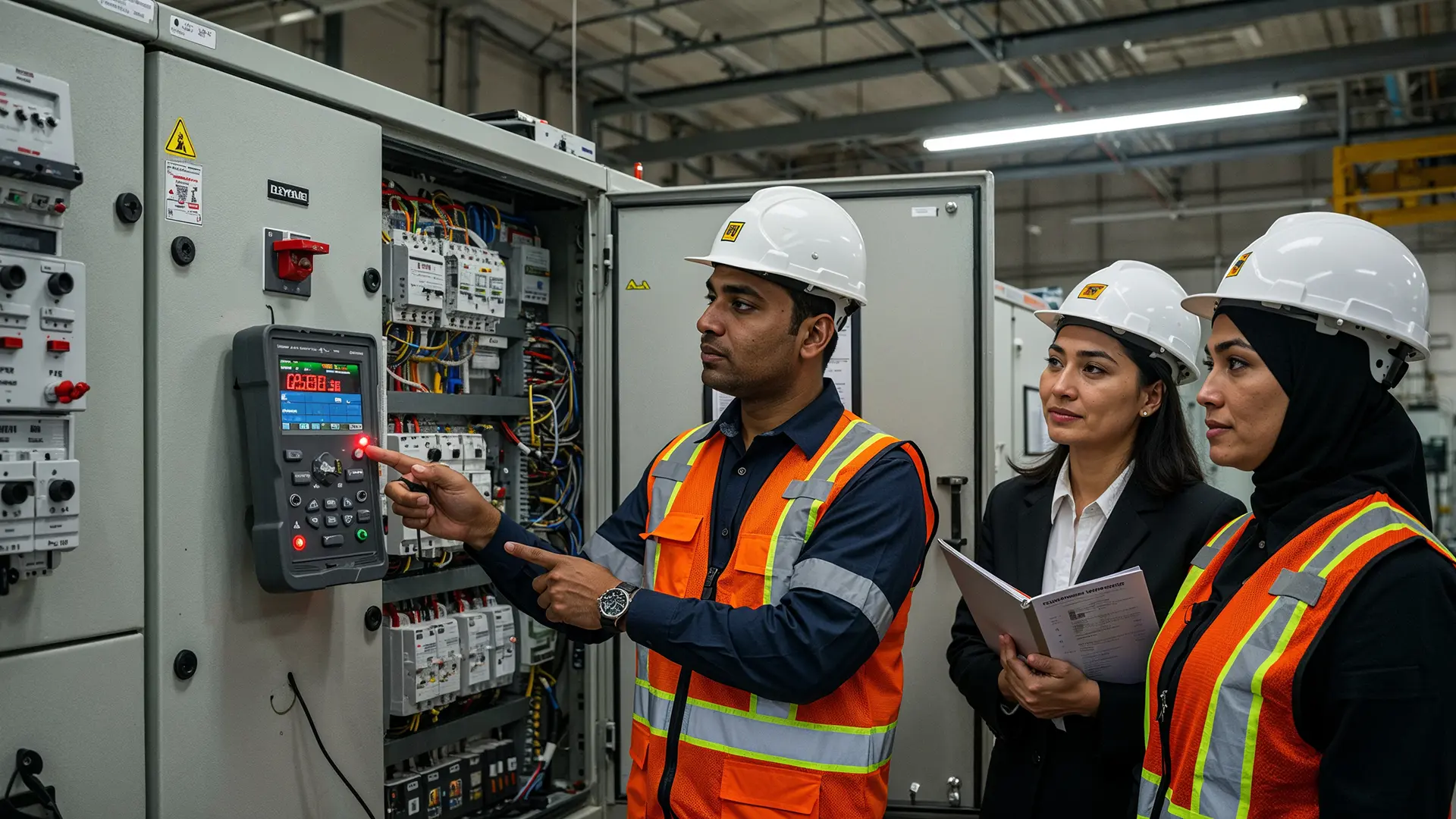
Testing and commissioning (T&C) is often seen as the stage where problems surface. When delays happen, it is easy to assume that testing itself is the cause.
In practice, testing rarely creates problems. It reveals them.
At Pro E, most delays during T&C can be traced back to earlier stages of the project — particularly coordination, installation, and preparation. Understanding this distinction is key to delivering predictable project outcomes.
What testing and commissioning is meant to do
Testing and commissioning verifies that electrical systems:
- operate safely
- perform according to design
- meet regulatory and project requirements
It is not a troubleshooting phase. It is a verification phase.
When systems fail during testing, it is not because testing is too strict. It is because the system is not yet ready to be verified.
Why delays appear during testing
Testing is where all systems are energised and assessed under real conditions. This is often the first time issues become visible.
Common causes of delay include:
1. Access constraints
Electrical panels and equipment may meet minimum clearance requirements but still restrict safe testing once installation is complete.
2. Incomplete or inconsistent installation
Routing changes, loose terminations, or incomplete connections may not be obvious until systems are energised.
3. Heat and environmental conditions
Once systems are operational, thermal conditions change. Equipment that performs under idle conditions may behave differently under load.
4. Earthing and system interaction issues
Earthing continuity and system integration challenges often only surface when the full system is tested.
5. Documentation gaps
As-built information that does not reflect actual installation can slow down inspection and approval processes.
These issues are not caused by testing. They originate from earlier decisions and execution gaps.
The real source of delay: execution before testing
At Pro E, we see that T&C delays are most often the result of:
- late coordination between trades
- reactive installation due to compressed timelines
- insufficient constructability review
- lack of preparation before energisation
Testing simply exposes these gaps.
When systems are properly planned, installed, and verified beforehand, testing becomes a smooth and predictable process.
How Pro E approaches testing differently
To ensure that testing does not become a bottleneck, Pro E focuses on preparation before formal T&C begins.
Our approach includes:
- Constructability and access checks – Ensuring equipment can be safely accessed for testing, operation, and maintenance.
- Installation verification – Confirming routing, terminations, and connections before systems are energised.
- Pre-commissioning checks – Reviewing key elements such as earthing continuity, airflow, and equipment readiness.
- Site-aligned documentation – Ensuring that as-built information reflects actual installation for efficient inspection and approval.
In practice, this approach reduces rework, shortens testing cycles, and improves handover reliability.
From problem detection to predictable delivery
Testing and commissioning should not be viewed as a risk stage. It should be the point where a well-executed system is confirmed.
When projects rely on testing to uncover issues, delays are almost inevitable. When projects prepare for testing through disciplined execution, outcomes become predictable.
At Pro E, we approach every project with a simple principle – we ensure systems are ready before they are tested.
Conclusion
Delays during testing are rarely caused by testing itself. They are the result of earlier gaps in coordination, installation, and preparation.
By shifting focus from reacting during T&C to preparing before it, project teams can reduce uncertainty, avoid delays, and deliver systems that perform as intended.
Electrical systems do not fail at testing. They reveal what has already been missed.
Pro E is an electrical contractor in Penang delivering execution-focused electrical engineering solutions for commercial and industrial projects across Malaysia.
 The Golden Bull Award for Outstanding SME