
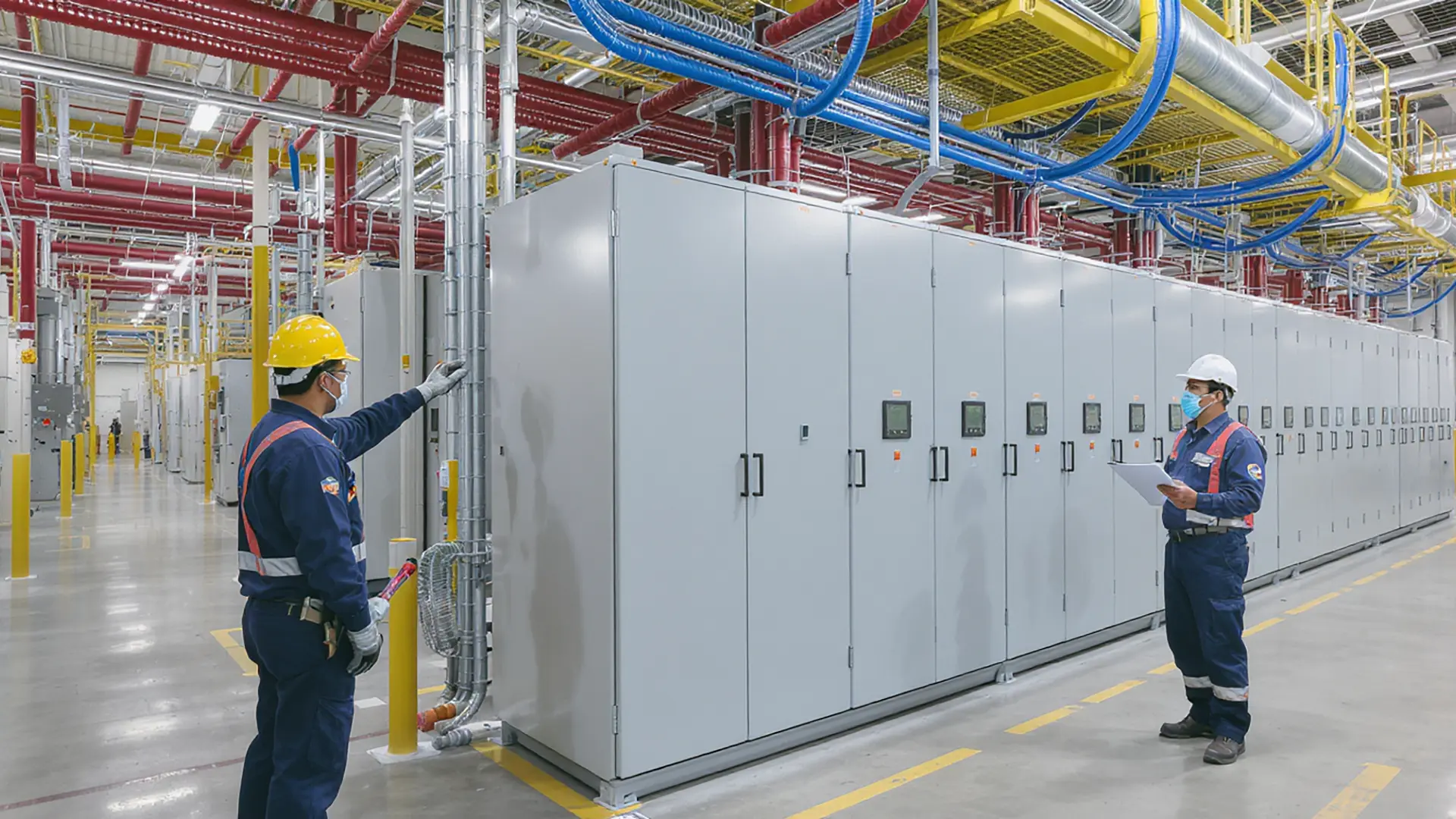
Business growth often requires additional electrical capacity.
Whether it is a new production line, additional machinery, facility expansion, or changes to operational requirements, increasing electrical demand can place new pressures on an existing electrical system.
Many organisations focus on equipment selection and production requirements first. However, electrical infrastructure should be reviewed just as carefully to ensure it can support current and future operational needs safely and reliably.
Why electrical capacity planning matters
Electrical systems are designed based on anticipated demand.
As facilities grow, the original design assumptions may no longer reflect actual operating conditions.
Without proper review, additional loads can create challenges such as:
- Overloaded electrical infrastructure
- Reduced system reliability
- Increased maintenance requirements
- Unexpected downtime
- Future expansion limitations
- Additional upgrade costs later
Planning ahead helps businesses avoid reactive decisions and supports smoother facility growth.
What is considered an electrical load?
An electrical load refers to equipment or systems that consume electrical power.
Examples include:
- Production machinery
- Manufacturing equipment
- Air conditioning systems
- Process equipment
- Lighting systems
- Pumps and motors
- Building services infrastructure
When multiple new loads are added over time, the overall demand on the facility’s electrical system can increase significantly.
Key areas to review before adding new loads
Available system capacity
One of the first questions to answer is whether the existing electrical system has sufficient capacity to support additional demand.
This may involve reviewing:
- Existing load profiles
- Transformer capacity
- Switchgear capacity
- Distribution board loading
- Spare capacity for future growth
A detailed assessment helps determine whether upgrades are required before expansion proceeds.
Power distribution infrastructure
Capacity alone is not always the only consideration.
The electrical distribution system must also be capable of delivering power safely and effectively to the new loads.
This may involve reviewing:
- Cable sizing
- Distribution routes
- Protection systems
- Power distribution boards
- Electrical room space requirements
In some situations, infrastructure upgrades may be required even when sufficient capacity exists elsewhere in the system.
Protection and coordination
As electrical systems evolve, protection settings may also need to be reviewed.
New loads can affect fault levels, protection coordination, and system performance.
Proper review helps ensure that protection systems continue to operate as intended and support overall system safety.
Future expansion plans
One of the most common mistakes is designing only for today’s requirements.
Facilities that expect future growth may benefit from considering:
- Additional spare capacity
- Future distribution requirements
- Expansion allowances
- Long-term operational objectives
Taking a longer-term view can help reduce disruption and avoid repeated upgrades.
Testing and commissioning requirements
Any modifications or upgrades should be properly tested and commissioned before being placed into operation.
Testing and commissioning help verify that systems perform as intended and support a safe transition into service.
Why early planning makes a difference
Electrical upgrades are often easier, more efficient, and more cost-effective when considered early in the planning process.
This is where practical engineering input can help project teams identify potential challenges, coordinate requirements, and evaluate options before construction or installation work begins.
A proactive approach often leads to better project outcomes and fewer surprises during implementation.
Supporting facility growth with the right electrical infrastructure
As facilities expand, electrical systems must evolve alongside operational requirements.
Reviewing electrical capacity, distribution infrastructure, protection systems, and future growth requirements early can help businesses make informed decisions and support reliable long-term operations.
At Pro E, we support industrial and commercial facilities through MV and LV electrical distribution, power systems, testing and commissioning, maintenance, and practical design-to-execution support.
With capabilities including medium voltage distribution systems of up to 33kV, our focus remains on helping clients build electrical infrastructure that supports both today’s requirements and tomorrow’s growth.
 The Golden Bull Award for Outstanding SME